AWS Classification Explained: ERCoCr-E (Stellite 21 / Co21)
The ERCoCr-E designation follows the AWS A5.21 naming convention. Each code segment carries a specific meaning, broken down below.
| Designator |
Meaning |
| ER |
Electrode/Rod; suitable for GTAW and OAW filler applications |
| Co |
Cobalt-base alloy |
| Cr |
Chromium is the primary alloying element after cobalt |
| -E |
Composition Group E; Co-Cr-Mo system (no tungsten) |
The “-E” suffix is the critical distinction. Groups -A, -B, and -C designate Co-Cr-W (tungsten-bearing) alloys such as Stellite 6, 12, and 1. Group -E replaces tungsten entirely with molybdenum, producing a fundamentally different carbide structure (M₂₃C₆ rather than M₇C₃/WC) and a deposit optimised for corrosion and cavitation rather than abrasion.
Chemical Composition of ERCoCr-E Weld Deposit (%)
The chemical composition of the ERCoCr-E weld deposit per AWS A5.21 is listed below in the table:
| Specification |
Carbon (C) |
Chromium (Cr) |
Molybdenum (Mo) |
Nickel (Ni) |
Iron (Fe) |
Tungsten (W) |
Silicon (Si) |
Manganese (Mn) |
Cobalt (Co) |
| AWS Range (%) |
0.20–0.35 |
25.0–29.0 |
4.5–7.0 |
1.5–4.0 |
3.0 max |
0 max |
1.5 max |
1.0 max |
Balance |
| Typical (%) |
0.25 |
27.0 |
5.5 |
— |
— |
0 |
— |
— |
~63 |
Low carbon at 0.20-0.35% keeps carbide volume fraction minimal. The CoCrMo solid-solution matrix (not carbides) drives corrosion resistance and cavitation performance, setting Cobalt 21 apart from every tungsten-bearing Stellite grade.
Deposit Hardness and Mechanical Properties of Stellite 21 (ERCoCr-E)
Key deposit and mechanical properties of Stellite 21 (ERCoCr-E), including elongation and impact resistance, are mentioned below in the table
| Specification |
Deposit Hardness (2-layer GTAW) |
Single-Layer Hardness |
Work-Hardened Surface |
Elongation (wrought) |
Tensile Strength |
Yield Strength |
| Typical Value |
HRC 27–35 (280–350 HV) |
HRC 22–30 (dilution-dependent) |
HRC 40–45 (up to 550 HV) |
8–11% |
710 MPa (103 ksi) |
565 MPa (82 ksi) |
As-welded HRC 27-35 allows machining with standard carbide tools. In service, strain-induced FCC-to-HCP phase transformation pushes surface hardness to HRC 40-45; the deposit gets harder the longer it runs. That self-improving behaviour is Stellite 21’s defining mechanical trait.
Base Metal Compatibility for ERCoCr-E (Stellite 21) Hardfacing
ERCoCr-E (Stellite 21) hardfacing offers excellent weldability, low crack sensitivity, and broad compatibility with steel, stainless, nickel, and cobalt alloys.
| Parameter |
Information |
| Compatible Base Metals |
Carbon steels, low-alloy steels, austenitic stainless steels, tool steels, nickel-base alloys, cobalt-base alloys |
| Preheat – Carbon & Low-Alloy Steels |
200–300 °C, about half the preheat typically required for Stellite 1 |
| Preheat – Austenitic Stainless Steels |
No preheat required |
| Crack Sensitivity |
Lowest crack sensitivity among the Stellite family |
| Welding Characteristics |
High ductility allows wider weaving and higher heat input |
| Weldability vs Other Stellite Grades |
Easier to weld than Co6 and Co12, with reduced risk of check cracking |
Recommended Welding Parameters for ERCoCr-E Co21 Hardfacing
GTAW (TIG) parameters for ERCoCr-E on DCEN polarity with 100% argon shielding are listed below. Higher currents than Co1/Co12 are acceptable due to Co21’s low crack sensitivity.
| Rod Diameter |
Current Range (A) |
Notes |
| 1.6 mm |
60–90 |
Fine overlays, thin substrates |
| 2.4 mm |
80–120 |
General-purpose hardfacing |
| 3.2 mm |
100–150 |
Standard valve and die work |
| 4.0 mm |
130–170 |
Heavy build-up, large components |
OAW uses a neutral flame setting. PTA operates at 100-200 A. Preheat carbon steel to 200–300°C and keep the interpass temperature below 450°C. Slow cooling is recommended but less critical than with tungsten-bearing Stellite grades. Stress relief at 595-650°C if required by code.
Key Properties of ERCoCr-E (Stellite 21) Overlay
Five properties set ERCoCr-E apart from every other Stellite hardfacing alloy:
- Best cavitation erosion resistance in the Stellite family; the CoCrMo matrix absorbs impact energy without brittle fracture.
- Best corrosion resistance among all Stellite grades. NACE MR0175/ISO 15156 compatible for sour service hardfacing.
- Work hardening: surface hardness increases from HRC 27 to HRC 40-45 during service through strain-induced phase transformation.
- Thermal shock resistance: the ductile matrix withstands repeated heating and quenching cycles; ideal for hot forging dies.
- Machinable with carbide tooling at HRC 27-35 as-welded. Use correct speeds/feeds; the deposit work hardens rapidly under light passes.
Co21 is not suited for severe abrasion; low carbide volume means limited hard-particle wear resistance. For abrasive service, use ERCoCr-A (Co6) or ERCoCr-C (Co1).
Premium Industrial Materials
Get ERCoCr-E Filler Wire
at Competitive Prices
ISO Certified
Custom Sizes
Fast Delivery
Industrial Applications of ERCoCr-E Stellite 21 Welding Filler Wire
Corrosion resistance, cavitation performance, and thermal shock tolerance drive the use of ERCoCr-E in four primary sectors where the CoCrMo system outperforms tungsten-bearing Stellite grades.
Storage and Handling of ERCoCr-E
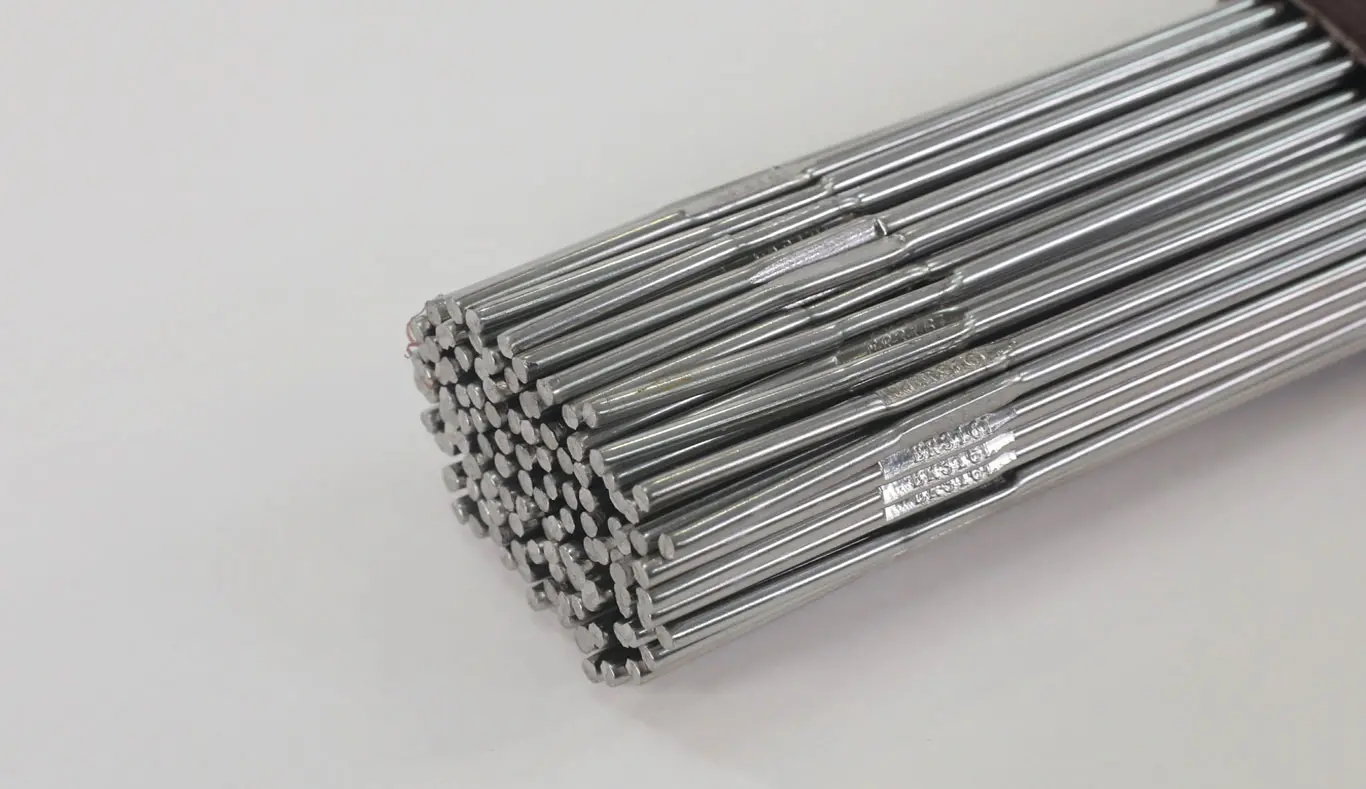
ERCoCr-E is a bare (uncoated) wire that requires no rebaking before use. Store rods and spools in a clean, dry area at ambient temperature. Co21 rods are less brittle than Co6/Co12/Co1 filler rods, making them easier to handle. Keep the wire free from oil, grease, and moisture to avoid deposit porosity.
Available Forms and Packaging
Nicorex Alloys stocks ERCoCr-E filler wire forms, diameters and packaging as mentioned below in the table:
| Form |
Diameter |
Packaging |
| TIG / OAW Bare Cast Rods (1000 mm length) |
1.6–4.8 mm |
Sealed tubes or moisture-barrier cartons |
| OAW Cast Rods |
3.2–8.0 mm |
Sealed tubes or moisture-barrier cartons |
| Continuous Drawn Wire on D200 / D300 Spools |
0.9–1.6 mm |
D200 / D300 spools |
| Powder for PTA / HVOF |
Not applicable |
Moisture-barrier packaging |
How to Order ERCoCr-E Filler Wire from Nicorex Alloys
To order ERCoCr-E cobalt-chromium-molybdenum filler wire, provide the following 10 details:
Frequently Asked Questions