
- Home
- Welding Consumables
- Stainless Steel Coated Electrodes
- AWS Class E309L/309H-16
AWS A5.4 E309L-16 / E309H-16 Welding Electrode Supplier in Mumbai, India
Nicorex Alloys is an ISO 9001 and ISO 14001 certified supplier of E309L-16 and E309H-16 stainless steel coated electrodes, based in Mumbai, India. We are one of the few Mumbai-based stockists that carry both variants in ready inventory, manufactured to AWS A5.4 / ASME SFA 5.4.
E309L-16 (UNS W30913) and E309H-16 (UNS W30910) share one alloy system but follow two opposite carbon strategies. E309L-16 restricts carbon to 0.04% maximum to prevent Cr₂₃C₆ carbide precipitation at grain boundaries, preserving intergranular corrosion resistance in dissimilar joints and wet chemical service. E309H-16 controls carbon at 0.04-0.15% because dissolved carbon pins dislocation movement above 500°C (932°F), delivering measurably higher creep rupture strength for furnace internals and boiler components. All other chemistry is identical: Cr 22-25%, Ni 12-14%, with a “-16” titania (rutile) coating for AC/DCEP operation in all positions. E309L-16 is the standard dissimilar welding electrode for joining 304/304L stainless to carbon steel, cladding barrier layers, and 304 clad steel fabrication. E309H-16 serves 309H and 304H base metals in high-temperature furnace construction, kiln linings, and boiler baffles where ASME creep data is required. The typical tensile strength is about 590 MPa (86 ksi) for E309L and 565-615 MPa (82-89 ksi) for E309H. The usual ferrite levels are more than 8 FN for E309L and 5-9 FN for E309H.
Both carry F-Number F-4 and A-Number A-8 per ASME Section IX. Available in diameters of 2.5, 3.15, 4.0, and 5.0 mm, supplied in vacuum-sealed packets. Every batch ships with MTC 3.1 per EN 10204 and chemical analysis. Contact Nicorex Alloys for current stock, pricing, and third-party approval availability on both grades.
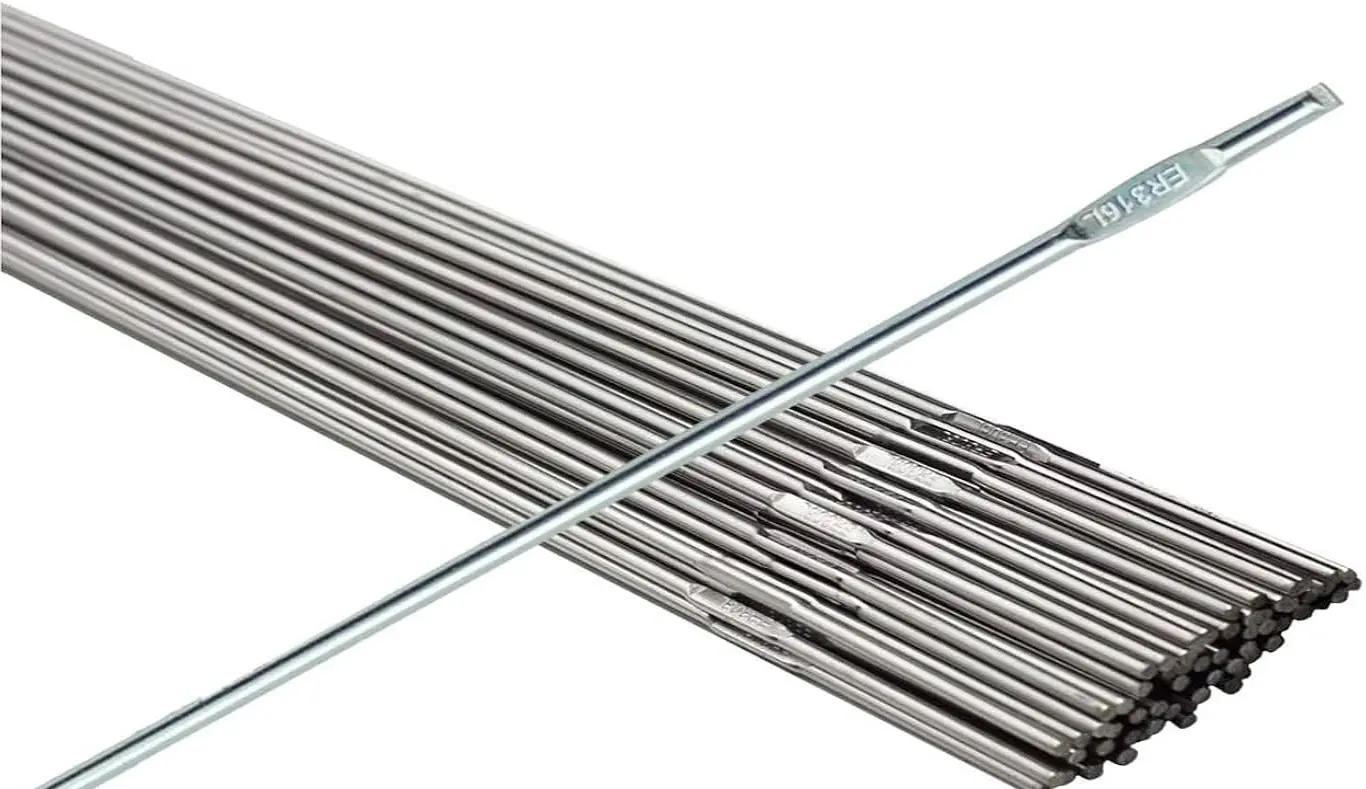
E309L-16 and E309H-16 Coated Electrode Specifications
| Parameter | E309L-16 / E309H-16 |
|---|---|
| AWS Classification | E309L-16 / E309H-16 |
| ASME SFA | SFA 5.4 |
| UNS Number | W30913 / W30910 |
| Welding Process | SMAW (Stick) |
| Electrode Coating | Titania (rutile) “-16” |
| Polarity | AC or DCEP |
| Welding Positions | All positions |
| Available Diameters | 2.5, 3.15, 4.0, 5.0 mm |
| Electrode Lengths | 300 mm (2.5 mm); 350 mm (3.15 mm+) |
| Base Metal Match | 309S, 304/304L (dissimilar to CS) / 309H, 304H (high-temp similar) |
Weld Deposit Chemical Composition — E309L-16 vs E309H-16
| Grade | C | Cr | Ni | Mo | Mn | Si | P | S | Cu |
|---|---|---|---|---|---|---|---|---|---|
| E309L-16 (wt.%) | ≤0.04 | 22.0-25.0 | 12.0-14.0 | 0.75 max | 0.5-2.5 | 0.90 max | 0.04 max | 0.03 max | 0.75 max |
| E309H-16 (wt.%) | 0.04-0.15 | 22.0-25.0 | 12.0-14.0 | 0.75 max | 0.5-2.5 | 0.90 max | 0.04 max | 0.03 max | 0.75 max |
All-Weld-Metal Mechanical Properties — E309L-16 vs E309H-16
| Grade | Tensile Strength | Yield Strength (0.2%) | Elongation | Ferrite Number | Hardness |
|---|---|---|---|---|---|
| E309L AWS Min | 520 MPa (75 ksi) | — | ≥30% | — | — |
| E309L Typical | 590 MPa (86 ksi) | 440 MPa (64 ksi) | 38% | >8 FN | ~170-190 HV |
| E309H AWS Min | 550 MPa (80 ksi) | — | ≥30% | — | — |
| E309H Typical | 565-615 MPa (82-89 ksi) | 462-483 MPa (67-70 ksi) | 35-41% | 5-9 FN | ~180-200 HV |
E309H carries a higher AWS tensile minimum (550 MPa vs 520 MPa) because the carbon addition provides solid-solution strengthening. The real advantage of E309H appears at temperatures above 500°C, where higher carbon maintains creep rupture strength. E309L deposits higher ferrite (>8 FN) because low carbon favours ferrite formation; higher ferrite improves hot cracking resistance in restrained dissimilar joints.
Base Metal Compatibility and P-Number Matrix for E309L-16 and E309H-16
| Base Metal A | Spec/UNS | P-No. | Base Metal B | P-No. | Electrode | Service |
|---|---|---|---|---|---|---|
| 304/304L | S30400/03 | P-8 Gr.1 | Carbon Steel | P-1 | E309L-16 | Corrosion |
| 304/304L | S30400/03 | P-8 Gr.1 | Low-Alloy Steel | P-3/P-4 | E309L-16 | Corrosion |
| 304 Clad Steel | SA-264 | P-1 | Clad Side Weld | — | E309L-16 | Corrosion |
| CS Overlay | — | P-1 | 1st Layer (Barrier) | — | E309L-16 | Cladding |
| 309H | S30909 | P-8 Gr.2 | 309H | P-8 Gr.2 | E309H-16 | High Temp |
| 304H | S30409 | P-8 Gr.2 | 304H | P-8 Gr.2 | E309H-16 | High Temp |
Recommended Welding Parameters for E309L-16 and E309H-16 Electrodes
| Diameter (mm) | Diameter (in) | Length (mm) | Current Range (A) | Polarity | Position |
|---|---|---|---|---|---|
| 2.5 | 3/32″ | 300 | 50–80 | AC/DCEP | All |
| 3.15 | 1/8″ | 350 | 80–120 | AC/DCEP | All |
| 4.0 | 5/32″ | 350 | 110–160 | AC/DCEP | All |
| 5.0 | 3/16″ | 350 | 140–200 | AC/DCEP | F, H |
Parameters are identical for both grades. When using E309L-16 as a barrier layer for E308L overlay on carbon steel, control heat input to keep dilution below 30% in the first pass. Use the lowest acceptable current, stringer beads, and a 10-15° drag angle. For E309H-16 in high-temperature service, verify that both base metal and filler meet the 0.04% minimum carbon requirement for ASME creep data qualification per Section II Part D.
Get E309L-16 / E309H-16 Welding Electrode at Competitive Prices
Industries & Welding Applications of E309L-16 and E309H-16 Electrodes
- Pressure Vessel Fabrication: E309L-16 is used for cladding and dissimilar joints in pressure vessels to provide a corrosion-resistant stainless barrier on carbon or low-alloy steel.
- Heat Exchanger Welding: E309L-16 joins stainless tubes or tube sheets to carbon steel shells, maintaining corrosion resistance on the process side while handling dilution into the steel.
- Furnace Components: Used in furnace tubes, hangers, and structural parts exposed to long-term high temperatures where creep resistance is critical.
- Petrochemical Equipment: E309L-16 handles corrosion-sensitive dissimilar joints in columns, reactors, and clad vessels, while E309H-16 is chosen where hot hydrogen and high temperature combine.
- Power Plant Applications: Supports high-temperature piping, headers, and structural welds in fossil and biomass plants, especially where creep data is required.
- Boiler Component Welding: E309H-16 welds high-temperature boiler internals such as baffles, tube supports, and shields that face sustained elevated temperatures.
- Superheater & Reheater Tube Welding: Used for joining and repairing superheater and reheater tubes carrying very hot steam, ensuring welds match the creep strength of 309H or 304H tubing.

Storage, Handling, and Re-Drying Procedures for E309L-16 / E309H-16 Electrodes
These procedures apply identically to both grades. Unopened vacuum-sealed packets require no re-drying if the packaging is intact. After opening, store unused electrodes in a holding oven at 100-150°C (212-300°F). If exposed to humidity, re-bake at 250-300°C (480-570°F) for 1-2 hours. Limit re-baking to 3 cycles maximum.
Contamination warning: Use dedicated stainless steel wire brushes, grinding discs, and cutting tools. Carbon steel tooling introduces free iron on the weld surface, causing rust initiation and reducing corrosion resistance. For E309L-16 in particular, avoid carbon-arc gouging on the stainless side. Carbon pickup from gouging can raise local carbon above 0.04%, negating the “L” grade’s sensitisation resistance. Plasma or mechanical gouging is preferred.
Available Sizes for E309L-16 / E309H-16 Stick Electrode
| Diameter (mm) | Diameter (in) | Length (mm) | Current (A) |
|---|---|---|---|
| 2.5 | 3/32″ | 300 | 50-80 |
| 3.15 | 1/8″ | 350 | 80-120 |
| 4.0 | 5/32″ | 350 | 110-160 |
| 5.0 | 3/16″ | 350 | 140-200 |
For thick carbon steel above 25 mm, an optional 100-150°C preheat on the CS side reduces hydrogen cracking risk. Stringer beads are recommended for overlay and cladding with E309L-16. Moderate weave is acceptable for E309H-16 similar joints. Use argon back-purge for root passes on the pipe.
PWHT warning: Avoid PWHT on E309L dissimilar joints. For E309H similar joints on 309H base metal, solution annealing at 1038-1149°C (1900-2100°F) with rapid cooling is metallurgically acceptable if required.
Industries & Welding Applications of E309L-16 and E309H-16 Electrodes
- AWS Classification: E309L-16 or E309H-16 (specify)
- Diameter(s) Required: 2.5 / 3.15 / 4.0 / 5.0 mm
- Quantity: Specify in kg
- Packaging: Vacuum-sealed packets
-
Third-Party Approvals: TÜV / DNV / Lloyds / ABS (if required)
-
MTC: 3.1 per EN 10204
-
Ferrite Number Requirement: If applicable
- Carbon Verification: For E309H, confirm 0.04% minimum on MTC for ASME creep qualification
Frequently Asked Questions
What is the difference between E309L-16 and E309H-16?
Can E309L-16 be used instead of E309LMo-16 for 316 Clad Steel?
What is the maximum service temperature for E309L-16 dissimilar joints?
Can E309L-16 be used as a Buffer Layer before depositing E308L Overlay on Carbon Steel?
What ASME F-Number and A-Number apply to E309L-16 and E309H-16?
OUR PRODUCTS
- Welding Consumables
- Coated Electrodes
- High Temperature Alloys Coated Electrodes
- Corrosion Resistant Alloys Coated Electrodes
- Stellite / Cobalt Welding Electrodes
- Chrome Moly Welding Electrodes
- Duplex & Super Duplex Steel Welding Electrodes
- Stainless Steel Welding Electrodes
- AWS Class E308L/308H-16 Welding Electrodes
- AWS Class E309L/309H-16 Welding Electrode
- AWS Class E309LMo-16 Welding Electrodes
- AWS Class E310-16 Welding Electrodes
- AWS Class E312-16 Welding Electrodes
- AWS Class E316L/316H-16 Welding Electrodes
- AWS Class E317L-16 Welding Electrodes
- AWS Class E320LR-16 Welding Electrodes
- AWS Class E330-16 Welding Electrodes
- AWS Class E347-16 Welding Electrodes
- AWS Class E385-16 Welding Electrodes
- AWS Class E410-15 Welding Electrodes
- AWS Class E410-16 Welding Electrodes
- AWS Class E410NiMo-16 Welding Electrode
- AWS Class E630-16 Welding Electrodes
- Nickel Alloys Coated Electrodes
- MIG & TIG
- Welding Wire
- SAW & Flux
- Coated Electrodes
- Sheets & Plates
- Pipes & Pipe Fittings
- Round Bar
- Flanges
- Fasteners